
树表示由边缘连接的节点。我们将要具体地讨论二叉树或二叉搜索树。
二叉树是用于数据存储目的的特殊的数据结构。二叉树有一个特殊的情况,每个节点可以有两个子节点。二叉树有序数组和链表的两个好处,搜索排序在数组插入或删除操作一样快的,在链表也是尽可能快。
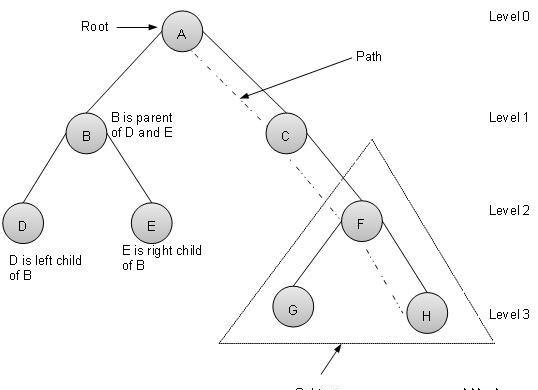
术语
以下是关于树的重要方面。
-
路径 − 路径是指沿一棵树的边缘节点的序列。
-
根 − 节点在树的顶部被称为根。有每棵树只有一个根和一个路径从根节点到任何节点。
-
父子点 − 除根节点的任何一个节点都有一个边缘向上的节点称为父节点。
-
子节点 − 给定节点的边缘部分连接向下以下节点被称为它的子节点。
-
叶子点 − 节点不具有任何子节点被称为叶节点。
-
子树 − 子树代表一个节点的后代。
-
访问 − 访问是指检查某个节点的值在控制的节点上时。
-
遍历 − 遍历意味着通过节点传递一个特定的顺序。
-
层次 − 一个节点的层次表示的节点的产生。如果根节点的级别是0,那么它的下一子结点为1级,其孙子是2级等。
-
键 − 键表示基于一个节点在其上的搜索操作将被进行了一个节点的值。
二叉搜索树表现出特殊的行为。一个节点的左子的值必须低于其父的值,节点的右子节点的值必须大于它的父节点的值。
二叉搜索树表示
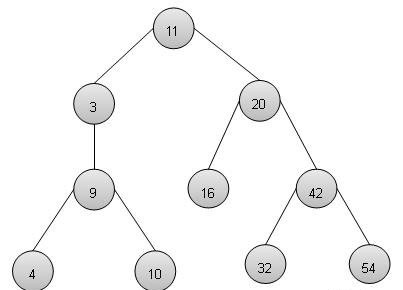
我们将使用节点对象来实现树,并通过引用连接它们。
基本操作
以下是遵循树的基本操作。
-
搜索 − 搜索一棵树中的元素
-
插入 − 插入元素到一棵树中
-
前序遍历 − 遍历树前序方法
-
中序遍历 − 遍历树在序方法
-
后序遍历− 遍历树的后序方法
节点
限定了具有一些数据,引用其左,右子节点的节点。
struct node {
   int data;
   struct node *leftChild;
   struct node *rightChild;
};
搜索操作
每当一个元素被搜索。开始从根节点搜索后,如果数据小于键值,在左子树中搜索元素,否则在右子树搜索元素。每一个节点按照同样的算法。
struct node* search(int data){
   struct node *current = root;
   printf("Visiting elements: ");

   while(current->data != data){
      if(current != NULL)
         printf("%d ",current->data);
         //go to left tree

         if(current->data > data){
            current = current->leftChild;
         }//else go to right tree
         else{
            current = current->rightChild;
         }

         //not found
         if(current == NULL){
            return NULL;
         }

      return current;
   }
}
插入操作
每当一个元素被插入。首先找到它应有的位置。从根节点开始搜索,那么如果数据小于键值,在搜索左子树空位置并插入数据。否则,在右子树搜索空位置并插入数据。
void insert(int data){
   struct node *tempNode = (struct node*) malloc(sizeof(struct node));
   struct node *current;
   struct node *parent;

   tempNode->data = data;
   tempNode->leftChild = NULL;
   tempNode->rightChild = NULL;

   //if tree is empty
   if(root == NULL){
      root = tempNode;
   }else{
      current = root;
      parent = NULL;

      while(1){
         parent = current;

         //go to left of the tree
         if(data < parent->data){
            current = current->leftChild;
            //insert to the left
            if(current == NULL){
               parent->leftChild = tempNode;
               return;
            }
         }//go to right of the tree
         else{
            current = current->rightChild;
            //insert to the right
            if(current == NULL){
               parent->rightChild = tempNode;
               return;
            }
         }
      }
   }
}
前序遍历
这是一个简单的三个步骤。
- 访问根结点
- 遍历左子树
- 遍历右子树
void preOrder(struct node* root){
   if(root != NULL){
      printf("%d ",root->data);
      preOrder(root->leftChild);
      preOrder(root->rightChild);
   }
}
中序遍历
这是一个简单的三个步骤。
- 遍历左子树
- 访问根结点
- 遍历右子树
void inOrder(struct node* root){
   if(root != NULL){
      inOrder(root->leftChild);
      printf("%d ",root->data);
      inOrder(root->rightChild);
   }
}
后序遍历
这是一个简单的三个步骤。
- 遍历左子树
- 遍历右子树
- 访问根结点
void postOrder(struct node* root){
   if(root != NULL){
      postOrder(root->leftChild);
      postOrder(root->rightChild);
      printf("%d ",root->data);
   }
}
演示程序
TreeDemo.c
#include <stdio.h>
#include <string.h>
#include <stdlib.h>
#include <stdbool.h>

struct node {
   int data;
   struct node *leftChild;
   struct node *rightChild;
};

struct node *root = NULL;

void insert(int data){
   struct node *tempNode = (struct node*) malloc(sizeof(struct node));
   struct node *current;
   struct node *parent;

   tempNode->data = data;
   tempNode->leftChild = NULL;
   tempNode->rightChild = NULL;

   //if tree is empty
   if(root == NULL){
      root = tempNode;
   }else{
      current = root;
      parent = NULL;

      while(1){
         parent = current;

         //go to left of the tree
         if(data < parent->data){
            current = current->leftChild;
            //insert to the left
            if(current == NULL){
               parent->leftChild = tempNode;
               return;
            }
         }//go to right of the tree
         else{
            current = current->rightChild;
            //insert to the right
            if(current == NULL){
               parent->rightChild = tempNode;
               return;
            }
         }
      }
   }
}

struct node* search(int data){
   struct node *current = root;
   printf("Visiting elements: ");

   while(current->data != data){
      if(current != NULL)
         printf("%d ",current->data);

         //go to left tree
         if(current->data > data){
            current = current->leftChild;
         }//else go to right tree
         else{
            current = current->rightChild;
         }

         //not found
         if(current == NULL){
            return NULL;
         }
      }
   return current;
}

void preOrder(struct node* root){
   if(root != NULL){
      printf("%d ",root->data);
      preOrder(root->leftChild);
      preOrder(root->rightChild);
   }
}

void inOrder(struct node* root){
   if(root != NULL){
      inOrder(root->leftChild);
      printf("%d ",root->data);
      inOrder(root->rightChild);
   }
}

void postOrder(struct node* root){
   if(root != NULL){
      postOrder(root->leftChild);
      postOrder(root->rightChild);
      printf("%d ",root->data);
   }
}

void traverse(int traversalType){
   switch(traversalType){
      case 1:
         printf("\nPreorder traversal: ");
         preOrder(root);
         break;
      case 2:
         printf("\nInorder traversal: ");
         inOrder(root);
         break;
      case 3:
         printf("\nPostorder traversal: ");
         postOrder(root);
         break;
   }
}

int main() {
   /*                     11               //Level 0
   */
   insert(11);

   /*                     11               //Level 0
   *                      |
   *                      |---20           //Level 1
   */
   insert(20);

   /*                     11               //Level 0
   *                      |
   *                  3---|---20           //Level 1
   */
   insert(3);

   /*                     11               //Level 0
   *                      |
   *                  3---|---20           //Level 1
   *                           |
   *                           |--42       //Level 2
   */
   insert(42);

   /*                     11               //Level 0
   *                      |
   *                  3---|---20           //Level 1
   *                           |
   *                           |--42       //Level 2
   *                               |
   *                               |--54   //Level 3
   */
   insert(54);

   /*                     11               //Level 0
   *                      |
   *                  3---|---20           //Level 1
   *                           |
   *                       16--|--42       //Level 2
   *                               |
   *                               |--54   //Level 3
   */
   insert(16);

   /*                     11               //Level 0
   *                      |
   *                  3---|---20           //Level 1
   *                           |
   *                       16--|--42       //Level 2
   *                               |
   *                           32--|--54   //Level 3
   */
   insert(32);

   /*                     11               //Level 0
   *                      |
   *                  3---|---20           //Level 1
   *                  |        |
   *                  |--9 16--|--42       //Level 2
   *                               |
   *                           32--|--54   //Level 3
   */
   insert(9);

   /*                     11               //Level 0
   *                      |
   *                  3---|---20           //Level 1
   *                  |        |
   *                  |--9 16--|--42       //Level 2
   *                     |         |
   *                  4--|     32--|--54   //Level 3
   */
   insert(4);

   /*                     11               //Level 0
   *                      |
   *                  3---|---20           //Level 1
   *                  |        |
   *                  |--9 16--|--42       //Level 2
   *                     |         |
   *                  4--|--10 32--|--54   //Level 3
   */
   insert(10);

   struct node * temp = search(32);
   if(temp != NULL){
      printf("Element found.\n");
      printf("( %d )",temp->data);
      printf("\n");
   }else{
      printf("Element not found.\n");
   }

   struct node *node1 = search(2);
   if(node1 != NULL){
      printf("Element found.\n");
      printf("( %d )",node1->data);
      printf("\n");
   }else{
      printf("Element not found.\n");
   }

   //pre-order traversal
   //root, left ,right
   traverse(1);

   //in-order traversal
   //left, root ,right
   traverse(2);

   //post order traversal
   //left, right, root
   traverse(3);
}
如果我们编译并运行上述程序,那么这将产生以下结果 -
Visiting elements: 11 20 42 Element found.(32)
Visiting elements: 11 3 Element not found.

Preorder traversal: 11 3 9 4 10 20 16 42 32 54
Inorder traversal: 3 4 9 10 11 16 20 32 42 54
Postorder traversal: 4 10 9 3 16 32 54 42 20 11